
I’ll be honest with you.
When I first started preparing for the Cisco 200-201 exam, I thought, “I’ve worked with firewalls, logs, alerts… how hard can this be?”
Two weeks in, reality hit.
CBROPS doesn’t test whether you know security terms.
It tests whether you can think like a SOC analyst under pressure.
I remember one night, scrolling through yet another long Cisco whitepaper, realizing I was spending hours but retaining very little. That’s when I changed direction. While reorganizing my study flow, I recently came across a solid resource while prepping for 200-201 — Leads4Pass (https://www.leads4pass.com/200-201.html). The question updates were fast, and it helped me focus on what actually mattered instead of drowning in theory. It saved me a lot of time, honestly.
Not magic.
Just efficient.
The Real Role of 200-201 in a Security Career
Let’s clear something up.
CBROPS is not just “another Cisco exam.”
It’s Cisco’s way of asking: Can you survive in a real SOC?
This exam sits right at the crossroads of:
- Network security
- Incident response
- Threat analysis
- Monitoring tools and workflows
If you’re aiming for:
- SOC Analyst roles
- Blue team positions
- Security operations paths
Then 200-201 is not optional. It’s foundational.
What Cisco Doesn’t Tell You About the CBROPS Exam
CBROPS Is Not a “Read-the-Book” Exam
You can read the official guide cover to cover and still fail.
Why?
Because Cisco loves:
- Log snippets
- Event correlation
- “What should you do next?” questions
This is about judgment, not memorization.
Why Lab Experience Alone Is Not Enough
Hands-on experience helps, but the exam is structured.
Cisco expects you to recognize patterns their way.
That’s why targeted 200-201 dumps, when used correctly, help bridge that gap between real-world thinking and exam logic.
How I Personally Approached Cisco 200-201 Without Burning Out
Here’s what finally worked for me:
- Morning: light theory (30–40 mins)
- Afternoon: scenario-based questions
- Evening: reviewing wrong answers only
No marathon sessions.
No cramming until midnight.
Consistency beats intensity every time.
The Modules That Actually Decide Pass or Fail
Let’s talk about where most of the points hide.
Security Operations & Incident Response
This is huge.
Know how to:
- Triage alerts
- Identify false positives
- Choose the next best action
Cisco loves asking what comes first, not what comes eventually.
Network Intrusion Analysis
You’ll see:
- Traffic patterns
- Attack indicators
- IDS/IPS logic
If you don’t understand why traffic is suspicious, dumps alone won’t save you.
Endpoint & Malware Concepts
Not deep reverse engineering — but:
- Malware behavior
- Attack lifecycle
- Containment steps
Common Traps Cisco Loves to Set
Why Many Experienced Engineers Still Fail
Because experience ≠ exam readiness.
Cisco often gives you two correct answers, but only one fits their process flow.
Miss the sequence — lose the point.
Where 200-201 Dumps Fit (And Where They Don’t)
Let’s be clear.
200-201 dumps are:
- A map, not the destination
- A time-saver, not a shortcut to ignorance
Used right, they show you:
- Question style
- Topic weight
- Repeated concepts
Used wrong, they turn into memorization traps.
A Resource That Saved Me Time (Real Talk)
I’m picky with exam material.
What I liked about the 200-901 CBROPS dumps I reviewed from Leads4Pass wasn’t just accuracy — it was relevance. The questions matched the exam tone, not just the topics. That’s rare.
One mention is enough. You don’t need ten tools. You need one reliable one.
Timing Strategy: You’re Racing the Clock
CBROPS is not generous with time.
My rule:
- First pass: answer what’s obvious
- Second pass: scenario-heavy questions
- Last 10 minutes: review flagged ones only
Never stare at one question for five minutes.
That’s how people fail with unanswered questions at the end.
My Note-Taking System for CBROPS
Forget fancy notebooks.
I kept:
- One page per weak topic
- Only mistakes, no copied theory
- Short bullets, not paragraphs
By exam week, that stack was gold.
Latest 200-201CBROPS Dumps practice questions and answers
Below, I’ve put together some high-frequency real exam-style questions that showed up recently. Try answering them first before checking the explanations — that’s how you really learn.
| Complete exam questions and answers | Example | Last updated |
| 491 Q&A | 15 Q&A (Free online download) | 200-201 CBROPS Dumps |
Question 1:
Refer to the exhibit.

Which technology generates this log?
A. NetFlow
B. IDS
C. web proxy
D. firewall
Correct Answer: D
Question 2:
Refer to the exhibit.
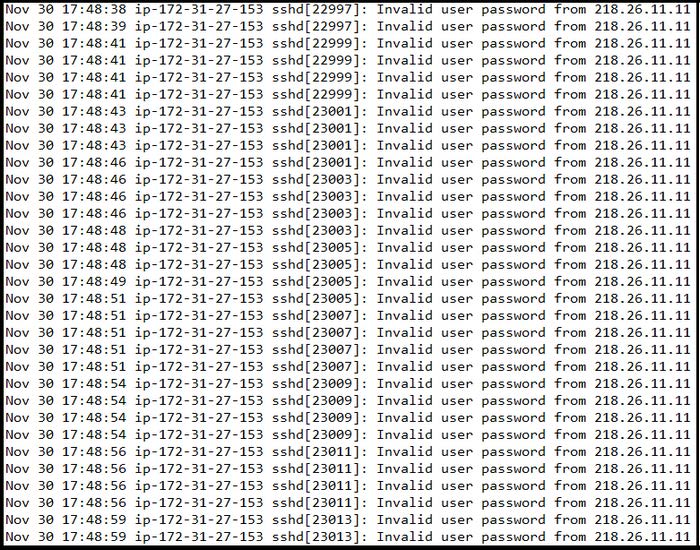
A security analyst is investigating unusual activity from an unknown IP address Which type of evidence is this file1?
A. indirect evidence
B. best evidence
C. corroborative evidence
D. direct evidence
Correct Answer: D
Question 3:
A company is using several network applications that require high availability and responsiveness, such that milliseconds of latency on network traffic is not acceptable. An engineer needs to analyze the network and identify ways to improve traffic movement to minimize delays. Which information must the engineer obtain for this analysis?
A. total throughput on the interface of the router and NetFlow records
B. output of routing protocol authentication failures and ports used
C. running processes on the applications and their total network usage
D. deep packet captures of each application flow and duration
Correct Answer: A
Question 4:
What are two differences between tampered disk images and untampered disk images? (Choose two.)
A. The image is tampered if the stored hash and the computed hash are identical.
B. Tampered images are used as an element for the root cause analysis report.
C. Untampered images can be used as law enforcement evidence.
D. Tampered images are used in a security Investigation process.
E. The image is untampered if the existing stored hash matches the computed one.
Correct Answer: CE
Explanation:
C. Untampered images can be used as law enforcement evidence.
E. The image is untampered if the existing stored hash matches the computed one.
Question 5:
Refer to the exhibit.
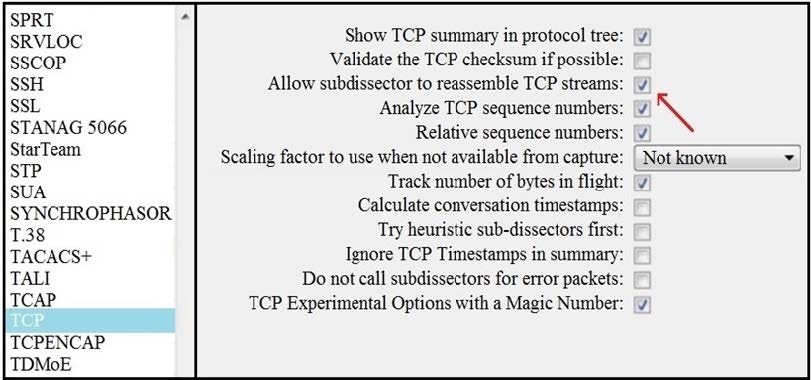
What is the expected result when the “Allow subdissector to reassemble TCP streams” feature is enabled?
A. insert TCP subdissectors
B. extract a file from a packet capture
C. disable TCP streams
D. unfragment TCP
Correct Answer: B
…
Additionally, if you want the complete and latest 200-201 dumps PDF, you can download it here for free:
https://drive.google.com/file/d/1zdkRzo_3LogJ9EeesAYMd5JsJKMHl5Xk/view?usp=sharing
How to Use 200-201 Dumps Without Hurting Your Skills
Here’s the balance:
- Read the question
- Answer it before looking
- Study why wrong options are wrong
That’s how dumps become a learning tool, not a crutch.
Final Week Checklist
- Review weak modules only
- Redo incorrect questions
- Light revision, no new material
- Sleep well (seriously)
Confidence matters more than one extra topic.
Final Thoughts From Someone Who’s Passed It
CBROPS is fair — but unforgiving.
If you respect the process, understand the logic, and use 200-201 dumps wisely, passing is absolutely achievable.
Don’t rush.
Don’t memorize blindly.
Think like a SOC analyst.
Conclusion
The Cisco 200-201 exam isn’t about being perfect. It’s about being prepared. Combine real understanding with well-chosen practice material, and you’ll walk into the exam calm and focused. Use 200-201 dumps as a guide, not a shortcut, and you’ll pass with confidence — and real skills to back it up.
FAQs
1. Are 200-201 dumps enough to pass CBROPS?
They help, but only when combined with concept understanding. Dumps show patterns, not full knowledge.
2. How often does Cisco update the CBROPS exam?
Minor updates happen regularly, which is why outdated dumps are risky.
3. Is CBROPS harder than CCNA Security?
Yes. It’s more scenario-based and operational, less memorization.
4. How long should I prepare for 200-201?
Most people need 6–8 weeks with consistent study.
5. Can beginners pass CBROPS?
Yes, but only with structured study and realistic expectations.